

Managing accurate financial records is one of the most important responsibilities for any UK business. Whether you run a small business, startup, limited company, or growing organisation, proper bookkeeping helps you understand where your money is going, how much your business is earning, and what financial obligations need attention.
As businesses grow, bookkeeping can become increasingly time-consuming. Recording transactions, reconciling bank accounts, managing invoices, tracking expenses, and maintaining VAT records all require consistency and attention to detail. This is why many businesses choose professional UK Bookkeeping Services to manage their day-to-day financial records.
Professional bookkeeping support can help businesses maintain accurate records, improve financial visibility, reduce administrative workload, and prepare better for tax and reporting requirements.
This guide explains what UK Bookkeeping Services involve, why bookkeeping is important, what tasks can be outsourced, and how businesses can choose the right bookkeeping support.
What Are UK Bookkeeping Services?
UK Bookkeeping Services involve the systematic recording, organising, and maintenance of a business’s financial transactions.
Bookkeeping is the foundation of effective accounting. Before accountants can prepare financial statements, tax calculations, or management reports, the underlying financial records need to be complete and accurate.
Typical bookkeeping activities include:
- Recording sales and purchases
- Recording business expenses
- Processing invoices
- Tracking customer payments
- Managing supplier transactions
- Bank reconciliation
- Credit card reconciliation
- Accounts payable
- Accounts receivable
- Maintaining VAT records
- Preparing regular bookkeeping reports
Businesses can manage these activities internally or work with an external bookkeeping provider.
Why Is Bookkeeping Important for UK Businesses?
Every business needs a clear understanding of its financial position. Without organised bookkeeping, it can be difficult to determine whether the business is profitable, whether customers have outstanding invoices, or whether expenses are increasing.
Reliable UK Bookkeeping Services help businesses maintain an organised financial record throughout the year rather than trying to reconstruct transactions at the end of the financial period.
Good bookkeeping can help businesses:
- Monitor income and expenses
- Understand cash flow
- Prepare for tax obligations
- Identify unpaid invoices
- Track business performance
- Support financial decision-making
- Maintain organised records
Accurate records also make it easier for accountants to prepare year-end accounts and other financial reports.
What Does a Professional Bookkeeper Do?
A professional bookkeeper is responsible for maintaining a business’s day-to-day financial records.
Their work may include entering transactions into accounting software, matching transactions with bank statements, categorising expenses, checking invoices, and producing regular financial reports.
Depending on the business, a bookkeeper may also support payroll information, VAT records, supplier payments, customer collections, and month-end processes.
The exact scope of UK Bookkeeping Services depends on the business’s size, industry, transaction volume, and financial requirements.
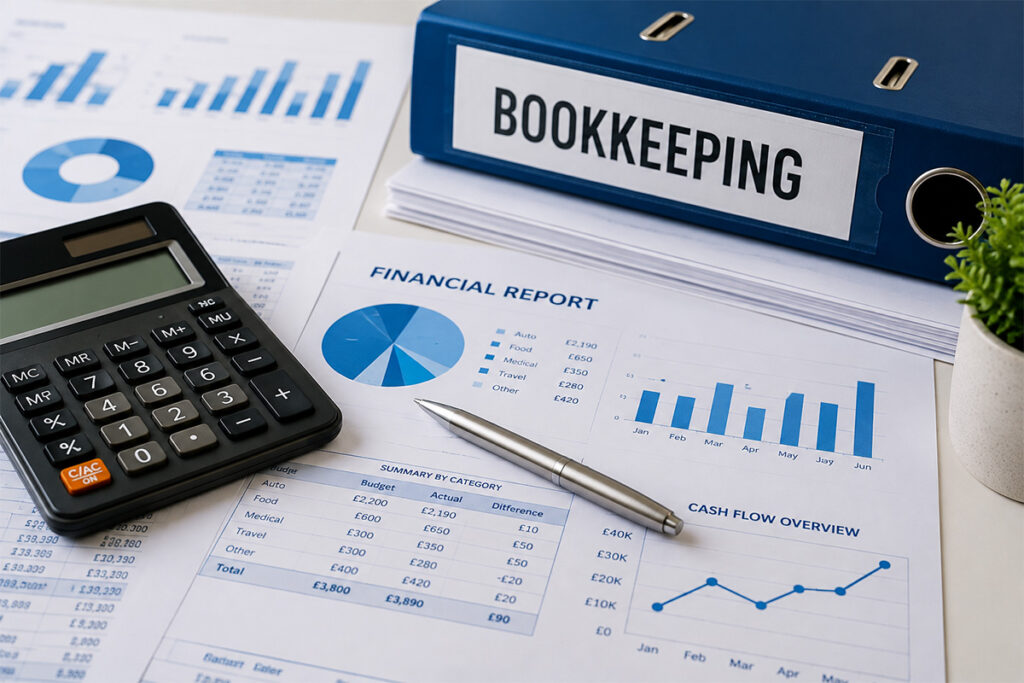
10 Benefits of UK Bookkeeping Services
1. Accurate Financial Records
Accurate bookkeeping gives businesses a reliable record of their financial activity.
When transactions are recorded correctly and regularly, business owners can access more dependable information when reviewing revenue, expenses, cash flow, and profitability.
2. Saves Valuable Time
Bookkeeping can involve hours of repetitive administrative work every week.
Outsourcing or delegating bookkeeping responsibilities allows business owners and management teams to spend more time on customers, operations, sales, and business development.
3. Better Cash Flow Visibility
Cash flow is critical for business stability.
Regular bookkeeping makes it easier to identify money coming into the business and payments going out. Businesses can also monitor overdue customer invoices and upcoming expenses.
4. Easier VAT Management
Businesses registered for VAT need to maintain appropriate records and submit VAT returns according to the applicable requirements.
Well-maintained bookkeeping records provide the financial information needed to support accurate VAT reporting.
5. Reduced Risk of Errors
Small bookkeeping mistakes can create problems later when preparing accounts or financial reports.
Professional bookkeeping processes, regular reconciliations, and appropriate accounting software can help identify discrepancies and reduce avoidable errors.
6. Improved Business Decisions
Financial records are not only useful for compliance. They also provide information for business planning.
By reviewing revenue, costs, margins, and cash flow, business owners can make better decisions about pricing, hiring, investment, and future growth.
7. Better Preparation for Year-End Accounts
Year-end accounting becomes easier when financial records have been maintained consistently throughout the year.
Organised bookkeeping gives accountants the information they need to prepare annual accounts and complete other required financial work.
8. Access to Accounting Technology
Modern bookkeeping increasingly relies on cloud-based accounting platforms.
Popular platforms used by UK businesses include QuickBooks, Xero, Sage, and FreeAgent. These tools can simplify transaction recording, reconciliation, invoice management, and financial reporting.
9. Scalable Financial Support
A business may have different bookkeeping requirements at different stages of growth.
A small startup may only need basic transaction recording, while a growing company may require regular reconciliations, invoice management, VAT support, and management reports.
Professional bookkeeping support can be adjusted as requirements change.
10. Reduced Administrative Pressure
Keeping financial records updated can become a significant administrative responsibility.
Using professional UK Bookkeeping Services can reduce this pressure and allow internal teams to concentrate on higher-value activities.
What Services Can Be Included?
The scope of bookkeeping varies between providers. Some businesses only require basic transaction recording, while others need more comprehensive support.
Common services include:
Bank Reconciliation
Bank reconciliation involves comparing accounting records with bank statements to identify differences or missing transactions.
Sales and Purchase Ledger
Bookkeepers can maintain records of customer invoices and supplier bills, helping businesses keep track of amounts owed and amounts due.
Accounts Receivable
Accounts receivable support focuses on customer invoices and outstanding payments. Regular monitoring can help businesses maintain healthier cash flow.
Accounts Payable
Accounts payable bookkeeping involves recording supplier invoices and monitoring payments due to suppliers.
Expense Tracking
Business expenses can be categorised and recorded to provide a clearer picture of operating costs.
VAT Bookkeeping
VAT-related transactions can be recorded and organised to support VAT return preparation and reporting.
Monthly Reports
Depending on the service arrangement, businesses may receive regular reports showing income, expenses, outstanding invoices, and other financial information.
Who Can Benefit From UK Bookkeeping Services?
Professional bookkeeping can benefit businesses across many sectors.
These include:
- Startups
- Small businesses
- SMEs
- Limited companies
- Sole traders
- E-commerce businesses
- Retail businesses
- Construction companies
- Professional service firms
- Hospitality businesses
- Manufacturing companies
- Property businesses
- Technology companies
The need for bookkeeping does not depend only on business size. Even a small company with relatively few transactions benefits from keeping accurate and organised financial records.
In-House vs Outsourced Bookkeeping
Businesses generally have two options: employ an internal bookkeeper or use an external provider.
An in-house bookkeeper provides direct internal support but involves employment costs, recruitment, training, software, and other overheads.
Outsourced bookkeeping can provide access to experienced professionals without requiring a full-time internal position. This can be particularly useful for small businesses that need professional support but do not have enough accounting work to justify a dedicated employee.
The right choice depends on transaction volume, budget, internal resources, and the complexity of the business’s financial requirements.
How to Choose the Right Bookkeeping Provider
Choosing a bookkeeping provider requires more than comparing prices.
Businesses should consider:
- Experience with UK businesses
- Knowledge of UK bookkeeping practices
- Accounting software expertise
- Data security procedures
- Communication process
- Reporting frequency
- Service flexibility
- Pricing structure
- Industry experience
- Ability to scale services
It is also useful to understand exactly what is included in the service before starting a long-term arrangement.
Common Bookkeeping Mistakes to Avoid
Businesses often experience bookkeeping problems because financial records are not updated consistently.
Common mistakes include:
- Delaying transaction entry
- Mixing personal and business expenses
- Failing to reconcile bank accounts
- Losing invoices or receipts
- Forgetting to record small expenses
- Not monitoring overdue invoices
- Incorrectly categorising transactions
- Leaving bookkeeping until the end of the year
Maintaining records regularly can prevent many of these issues.
How Technology Is Changing Bookkeeping
Technology has transformed the way businesses manage financial records.
Cloud accounting software allows business owners, bookkeepers, and accountants to access financial information securely from different locations. Automated bank feeds can reduce manual data entry, while digital invoicing and reporting tools can make financial administration more efficient.
However, technology does not eliminate the need for professional oversight. Businesses still need people who understand financial records, accounting processes, compliance requirements, and the context behind the numbers.
UK Bookkeeping Services and Business Growth
Final Thoughts
Good bookkeeping provides more than historical financial information. It can help businesses understand current performance and prepare for future decisions.
When financial records are maintained consistently, businesses can identify trends in sales, expenses, cash flow, and profitability.
This information can support decisions such as whether to expand a team, introduce a new product, invest in marketing, negotiate supplier terms, or review pricing.
For growing businesses, reliable UK Bookkeeping Services can therefore become an important part of overall financial management.
Reliable bookkeeping is an essential part of running a financially organised business. From recording daily transactions to monitoring cash flow and supporting VAT reporting, accurate financial records provide the foundation for effective accounting.
For businesses that do not want to manage every financial task internally, professional UK Bookkeeping Services can provide flexible support while reducing administrative pressure.
The most important factor is consistency. When financial records are updated regularly, reconciled properly, and maintained using suitable accounting systems, businesses have a clearer understanding of their financial position and can make more informed decisions.
Know More: Stay updated with the latest accounting insights, outsourcing tips, and industry trends by following Finex Accounting on LinkedIn and Instagram. Connect with us for practical advice, business updates, and expert financial guidance.